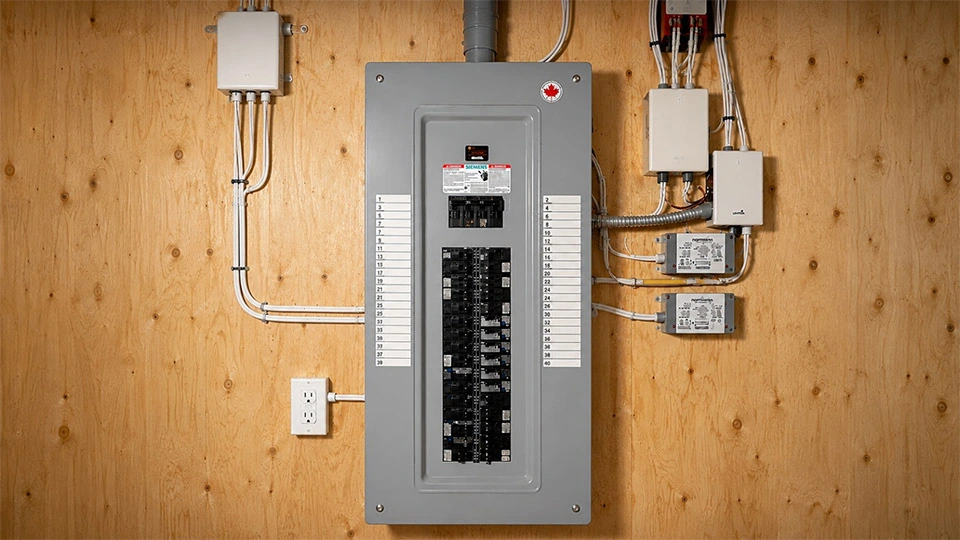
MAIN ELECTRICAL PANEL
Sub Panel vs Panel Upgrade: Which One Is Right for Your Home?
Running out of breaker space doesn't always mean you need a full electrical panel upgrade. In many Ontario homes, installing a sub panel is a practical solution. In others, especially when adding major electrical loads, upgrading the main electrical service is the better long-term investment. Here's how to understand the difference.
Many homeowners assume that a full electrical panel automatically means it's time for a larger service upgrade. While that can certainly be true, it's not always the most appropriate solution.
In many cases, adding a sub panel provides the extra circuit space needed for a basement renovation, garage, workshop, or home addition without replacing the existing main panel.
The right choice depends on several factors, including your home's existing electrical capacity, future power requirements, and the results of a professional load calculation.
What Is a Sub Panel?
A sub panel is a secondary electrical panel connected to your home's main electrical panel. It receives power from the main panel and distributes electricity to additional branch circuits in a specific area of the home.
Sub panels are commonly installed when homeowners need more breaker spaces or want to organize circuits for a new section of the property without replacing the existing main panel.
You'll often find sub panels serving finished basements, detached garages, workshops, home additions, or large renovations where multiple new circuits are required.
- Provides additional breaker spaces
- Supplies power to a specific area of the home
- Fed from the existing main electrical panel
- Can simplify future electrical expansions
- Does not increase the home's electrical service capacity
Good to Know
A sub panel creates additional space for new circuits, but it does not increase the amount of electricity your home can receive from the utility. Your available electrical capacity remains the same unless the main service itself is upgraded.
What Is a Panel Upgrade?
A panel upgrade involves replacing your existing main electrical panel with a newer panel that can better support your home's electrical needs. In many projects, the electrical service is also upgraded from 100 amps to 200 amps, providing additional capacity for larger electrical loads.
Panel upgrades are often recommended when older electrical equipment has reached the end of its service life or when homeowners plan to install equipment that significantly increases electrical demand.
A modern panel also provides additional breaker spaces, improved reliability, and room for future expansion as your home's electrical needs continue to grow.
- May increase the home's electrical capacity
- Adds space for future circuits
- Supports larger electrical loads
- Replaces aging or outdated electrical equipment
- Can prepare the home for future renovations
A panel upgrade may provide more breaker space, but its biggest advantage is increasing the home's ability to safely handle larger electrical loads when additional capacity is required.
The Biggest Misconception
One of the most common misconceptions is that installing a sub panel automatically gives your home more electrical power. In reality, a sub panel only creates additional circuit space. It does not change the amount of electricity available from your existing electrical service.
For example, if your home has a 100 amp electrical service, installing a sub panel still leaves you with a 100 amp service. The power is simply distributed through an additional panel.
This distinction becomes especially important when homeowners are planning to install an EV charger, hot tub, electric furnace, heat pump, or other high-demand equipment. In these situations, available breaker space alone does not determine whether your existing service is sufficient.
Think of It This Way
A sub panel is similar to adding another power bar in your home. It gives you more places to plug things in, but it doesn't increase the amount of electricity coming into the house. Only a service upgrade can increase your home's electrical capacity.
When a Sub Panel Is the Right Choice
Installing a sub panel can be an excellent solution when your existing electrical service has enough available capacity but your main panel has limited breaker space.
This is common during home renovations where several new circuits need to be added without replacing the entire electrical system.
A licensed electrician will typically perform a load calculation to confirm that the existing service can safely support the additional circuits before recommending a sub panel.
- Finishing a basement
- Building a detached garage or workshop
- Adding a home addition
- Creating a dedicated panel for a rental suite
- Organizing multiple new branch circuits
- Expanding electrical distribution while existing capacity remains sufficient
When properly designed, a sub panel can provide a clean, organized, and cost-effective way to expand your home's electrical system without performing a full service upgrade.
When You Actually Need a Panel Upgrade
While a sub panel solves the problem of limited breaker space, it cannot increase the amount of electricity available to your home. If your existing electrical service is already operating near its capacity, adding a sub panel alone won't solve the problem.
This is where a panel upgrade becomes the better long-term solution. By increasing the home's electrical capacity, a larger service can safely support additional appliances and future expansions without overloading the existing system.
A licensed electrician will typically perform a load calculation before recommending a service upgrade. The decision is based on your home's actual electrical demand, not simply the number of empty breaker spaces available.
- Installing a Level 2 EV charger
- Adding a heat pump or electric furnace
- Installing a hot tub or spa
- Building a large home addition
- Replacing gas appliances with electric models
- Increasing the home's overall electrical demand
Good to Know
A full electrical panel doesn't always mean you need a larger service, and an empty panel doesn't always mean your home has enough capacity. The only reliable way to know is by performing a proper electrical load calculation.
Can an EV Charger Be Connected to a Sub Panel?
Yes, in many situations an EV charger can be supplied from a sub panel. However, the decision depends on your home's available electrical capacity rather than the location of the breaker.
If the existing electrical service has enough available capacity, installing a sub panel may be an effective way to add the dedicated circuit required for a Level 2 EV charger.
On the other hand, if the load calculation shows that your home is already close to its maximum capacity, upgrading the electrical service may be necessary before installing the charger.
Installing an EV charger from a sub panel is often possible. The important question isn't where the breaker is located—it's whether your home's electrical service can safely support the additional load.
Which Option Fits Your Situation?
Every home is different, but these are some of the most common situations homeowners face. The right solution depends on your available electrical capacity and future electrical needs.
My Electrical Panel Is Full
A full panel doesn't automatically mean you need a larger electrical service. If your home's existing capacity is sufficient, installing a sub panel may provide the additional breaker space needed for new circuits.
I'm Finishing My Basement
Finished basements often require several new circuits for lighting, receptacles, bathroom equipment, and other electrical loads. When adequate service capacity is available, a sub panel can be a practical way to distribute these new circuits.
I'm Installing a Heat Pump
Heat pumps can significantly increase a home's electrical demand. Depending on the existing service size and other connected loads, a panel upgrade may be recommended to ensure the system operates safely.
I'm Adding a Hot Tub
Hot tubs typically require a dedicated high-amperage circuit. Some homes already have enough available capacity, while others may require a service upgrade before installation.
I'm Building a Detached Garage
Detached garages commonly receive power through a sub panel. This allows multiple circuits for lighting, receptacles, garage door openers, EV chargers, or workshop equipment to be supplied from one convenient location.
How Electricians Decide Which Option Is Best
Choosing between a sub panel and a panel upgrade involves more than checking whether the main panel has empty breaker spaces. Electricians evaluate the entire electrical system before recommending the most appropriate solution.
Every home is different, and the right answer depends on both current electrical usage and future plans for the property.
- Existing service size (100 Amp, 200 Amp, etc.)
- Electrical load calculation
- Condition and age of the existing panel
- Number of new circuits being added
- Future renovation or expansion plans
- Ontario Electrical Safety Code requirements
Sub Panel vs Panel Upgrade at a Glance
| Feature | Sub Panel | Panel Upgrade |
|---|---|---|
| Adds more breaker spaces | ✓ | ✓ |
| Increases electrical capacity | X | ✓ |
| Best when breaker space is the only issue | ✓ | X |
| Required when the home needs more electrical capacity | X | ✓ |
| Common for renovations and additions | ✓ | Sometimes |
| Designed for future electrical growth | Limited | ✓ |
Both options can be the right solution. A sub panel adds circuit space when your existing electrical service has sufficient capacity, while a panel upgrade is the better choice when your home needs additional electrical capacity for future electrical demands.
Professional Assessment Matters
Two homes with the same 100 amp service can require completely different solutions. The decision depends on how much electrical capacity is already being used and what additional loads are planned for the future.
Final Thoughts
A sub panel and a panel upgrade solve different problems. A sub panel adds circuit space, while a panel upgrade increases your home's electrical capacity.
The right choice depends on your existing electrical service, your current electrical usage, and your future plans. A professional load calculation can determine which solution best meets your home's needs.
Frequently Asked Questions
Can I install a sub panel instead of upgrading my electrical panel?
Sometimes. If your home's existing electrical service has enough available capacity, a sub panel can provide additional breaker space for new circuits. If the load calculation shows that your service is already near its limit, a panel upgrade may be required instead.
Does a sub panel increase my home's electrical capacity?
No. A sub panel adds more circuit spaces but does not increase the amount of power available to your home. Only a panel or electrical service upgrade increases your home's electrical capacity.
Can I install an EV charger from a sub panel?
Yes, in many cases. The deciding factor is whether your home's electrical service has enough available capacity to support the additional load. A licensed electrician can perform a load calculation to determine if a sub panel is suitable.
How do electricians decide between a sub panel and a panel upgrade?
Electricians evaluate your home's existing electrical service, perform a load calculation, review the number of new circuits being added, and consider your future electrical plans. The recommendation is based on available capacity rather than simply whether the existing panel is full.
Need Help Choosing the Right Solution?
Our licensed electricians can evaluate your electrical system and recommend whether a sub panel or panel upgrade is the right solution for your home.
Request an AssessmentLicensed Electrical Contractor • ESA/ECRA Licence #7005619
![Grizzl-E Level 2 EV charger installed on a residential home in Ontario']](/images/blog/ev-charger-rebates-ontario.webp)
![Aluminum electrical wiring in an older Ontario home']](/images/blog/aluminum-wiring.webp)
![Modern AFCI and Dual Function Circuit Breakers']](/images/blog/brakers.png)